29 notes, 2012–2015
Top 7 Alternatives of PostDICOM
Many teams lose time waiting on image transfers between clinics and specialists because their current viewer lacks fast cross-site sharing. Others face rising storage costs or slow support when files pile up during peak weeks. A handful of these platforms also limit AI tool access to premium plans only.
By the end of this article you will see which seven alternatives solve those exact bottlenecks, how Medicai stacks up on deployment and support, and the concrete checklist needed to pick the platform that fits your workflow without hidden fees or extra hardware.
What to Look For in PostDICOM Alternatives
Evaluate any PostDICOM alternative by verifying the speed of DICOM retrieval, how many users can connect concurrently, and whether the platform supports both on-premise and cloud access.
Speed matters when radiologists need instant access to prior studies. Upload times under 30 seconds keep reporting workflows moving.
High-volume practices must confirm capacity for 200 concurrent users during peak hours. This prevents system slowdowns when multiple departments access imaging simultaneously.
- Integration with existing EHRs via HL7 or FHIR ensures patient data flows seamlessly between systems.
- Encryption standards AES-256 and TLS 1.2 protect sensitive imaging data during storage and transmission.
- HIPAA and GDPR certification proof demonstrates compliance with healthcare data regulations.
- Zero-footprint web viewers must work across Chrome, Safari, and Edge browsers without additional software.
- Mobile viewer latency under 3 seconds on 4G connections supports radiologists reviewing cases away from workstations.
- Annual uptime SLA of 99.9% guarantees reliable access to medical image management systems.
These eight criteria help narrow options when comparing DICOM viewer solutions. Each requirement addresses a specific pain point in radiology workflow and medical image management.
1. Medicai - Best Overall
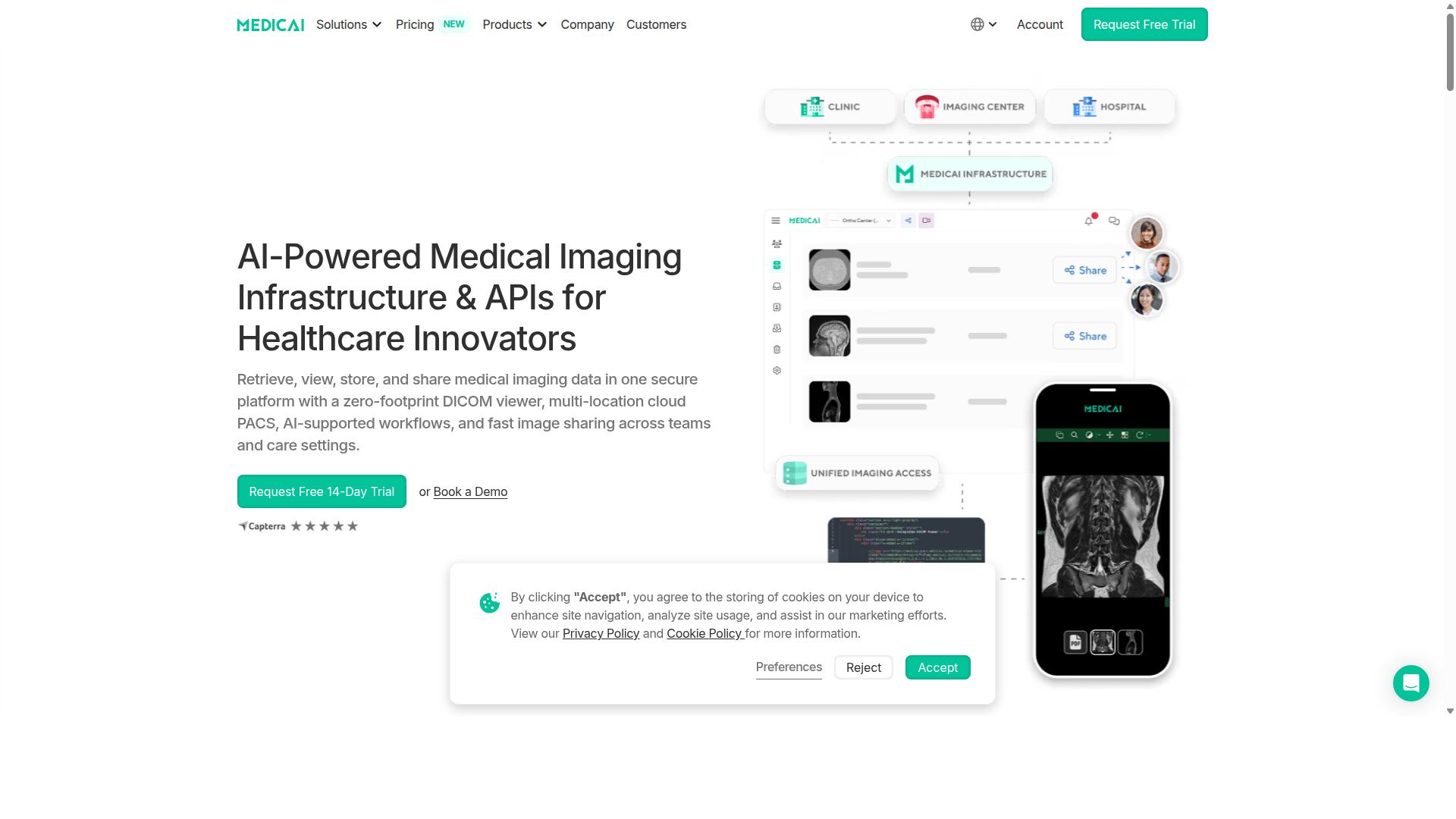
Medicai earns top ranking because it combines cloud PACS storage, real-time collaboration, and vendor-neutral archive capabilities in a single HIPAA-compliant platform.
This approach eliminates the need for separate on-premise servers that many other alternatives require. Healthcare teams can access studies from any location without managing additional hardware infrastructure.
The platform currently stores over 1.7 million studies and processes more than one million studies each year. FDA and CEE clearance status confirms compliance with medical device standards.
Key Features and Pricing
Medicai Starter plan at $249 per month includes 500 GB storage and unlimited user accounts, while the Standard plan at $749 per month adds 2 TB storage and one connected location.
Annual billing reduces these costs by 15 percent. Enterprise customers receive custom pricing based on specific storage and connectivity requirements. A one-time $1,000 setup fee applies for each DICOM Gateway installation per location.
The Starter plan includes five core products: Medical Imaging Uploader, Cloud PACS, Medical Image Exchange, Vendor Neutral Archive, and zero-footprint DICOM viewer. The platform supports over 50 million API transactions annually.
Deployment and Support
Deployment takes less than one business day because the zero-footprint viewer runs in any modern browser without installs, and the DICOM Gateway connects to existing modalities over secure VPN.
Account provisioning occurs within two hours of signup. The DICOM Gateway installs on a standard Windows server and automatically syncs modality worklists without manual configuration.
Global availability through AWS and Azure regions ensures consistent performance across different geographic areas. The 24/7 chat support maintains under 15-minute response times, and each new customer receives an onboarding call with a solutions engineer.
2. Studycast
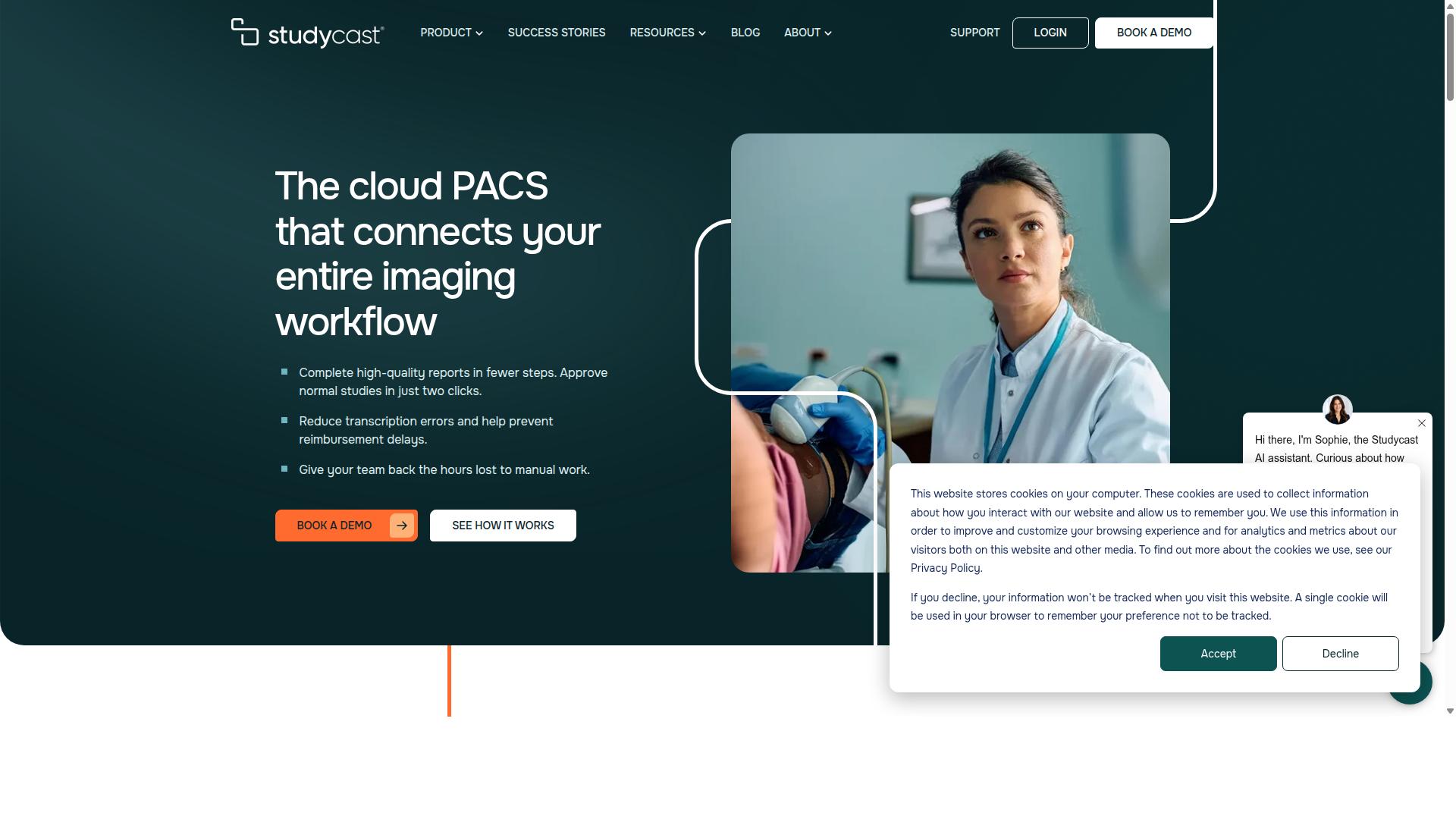
Studycast provides a cloud-based PACS and reporting workflow primarily targeting outpatient imaging centers. This platform handles medical imaging storage, review, and reporting across multiple modalities.
Core capabilities include structured reporting, workflow automation, and image sharing with EHR integration. The system supports ultrasound, nuclear imaging, X-ray, and MRI studies while maintaining HIPAA-compliant sharing protocols.
Many setups require separate viewer licensing beyond the base platform subscription. Organizations must budget for additional DICOM viewer costs depending on their existing infrastructure and user count.
The platform serves cardiology, vascular, women's health, and point-of-care specialties. It accommodates private practices, ambulatory surgery centers, hospitals, and mobile imaging providers through a centralized radiology workflow system.
Users can manage image upload, storage, and medical image management tasks within a single interface. The solution supports DICOM query, retrieve, and export functions for various clinical environments.
3. Intelerad

Intelerad offers an enterprise-grade PACS suite with advanced 3D visualization and AI add-ons. This platform targets large hospital systems that need to unify imaging across multiple departments and facilities. Deployment often involves complex integration with existing electronic health records and vendor-neutral archives.
The solution focuses on secure image exchange and access within extended healthcare networks. Hospitals use it to consolidate radiology, cardiology, and pathology records in one system. Integration with DICOM archive infrastructure supports both local and cross-site workflows.
Typical installations require dedicated IT resources and careful planning around medical image management policies. Larger health systems choose this route when they need a single platform to handle high-volume imaging traffic. The enterprise focus makes it less common for smaller clinics or independent practices.
4. ProtonPACS
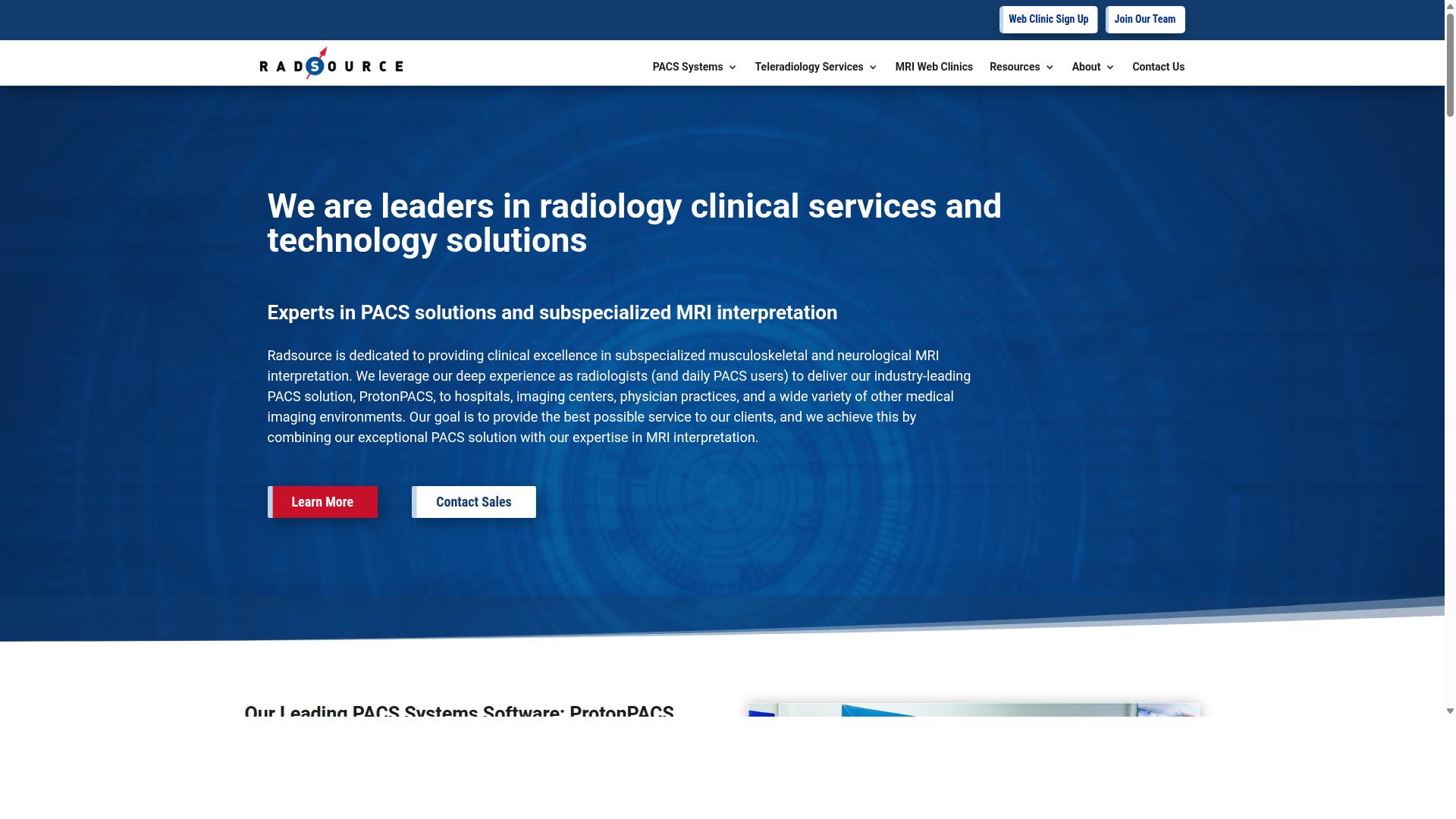
ProtonPACS delivers a hybrid cloud/on-premise PACS solution aimed at small-to-mid-size radiology groups.
The platform combines cloud-based image storage with local workstations that handle advanced viewing tasks. This approach suits practices that need both remote access and reliable on-site performance. Many users appreciate the flexibility to maintain control over critical data while still benefiting from centralized management tools.
Contract structures typically include hardware leasing bundled with software subscriptions. This model reduces upfront capital requirements for equipment purchases. Radiology departments gain access to workstations, AI-assisted tools, and support services under a single agreement structure.
The system supports multiple imaging modalities such as MRI, CT, x-ray, and ultrasound. Integration capabilities extend to existing RIS and EMR platforms already in use. Security measures align with HIPAA requirements for protected health information.
Worklist automation features help streamline daily radiology workflow across different locations. Users can access studies from various devices without compromising image quality or measurement accuracy. The platform also includes 3D reconstruction and annotation capabilities for detailed case review.
5. Ambra Health
Ambra Health specializes in image exchange and interoperability between disparate healthcare systems. This platform supports secure storage, upload, and sharing of both DICOM and non-DICOM images across multiple sites and EHR systems. Radiology practices, hospitals, and research organizations often select this solution for its vendor-neutral archive capabilities.
The system offers role-based access controls alongside web-based diagnostic viewing tools. Users can perform annotations, measurements, and data anonymization within the same interface. Remote collaboration features allow teams to review studies without physical proximity.
Ambra Health serves multi-location networks requiring centralized medical image management. The platform accommodates cardiology, life sciences, and academic research environments equally. Custom pricing structures reflect the varied needs of different healthcare settings.
6. UltraLinq
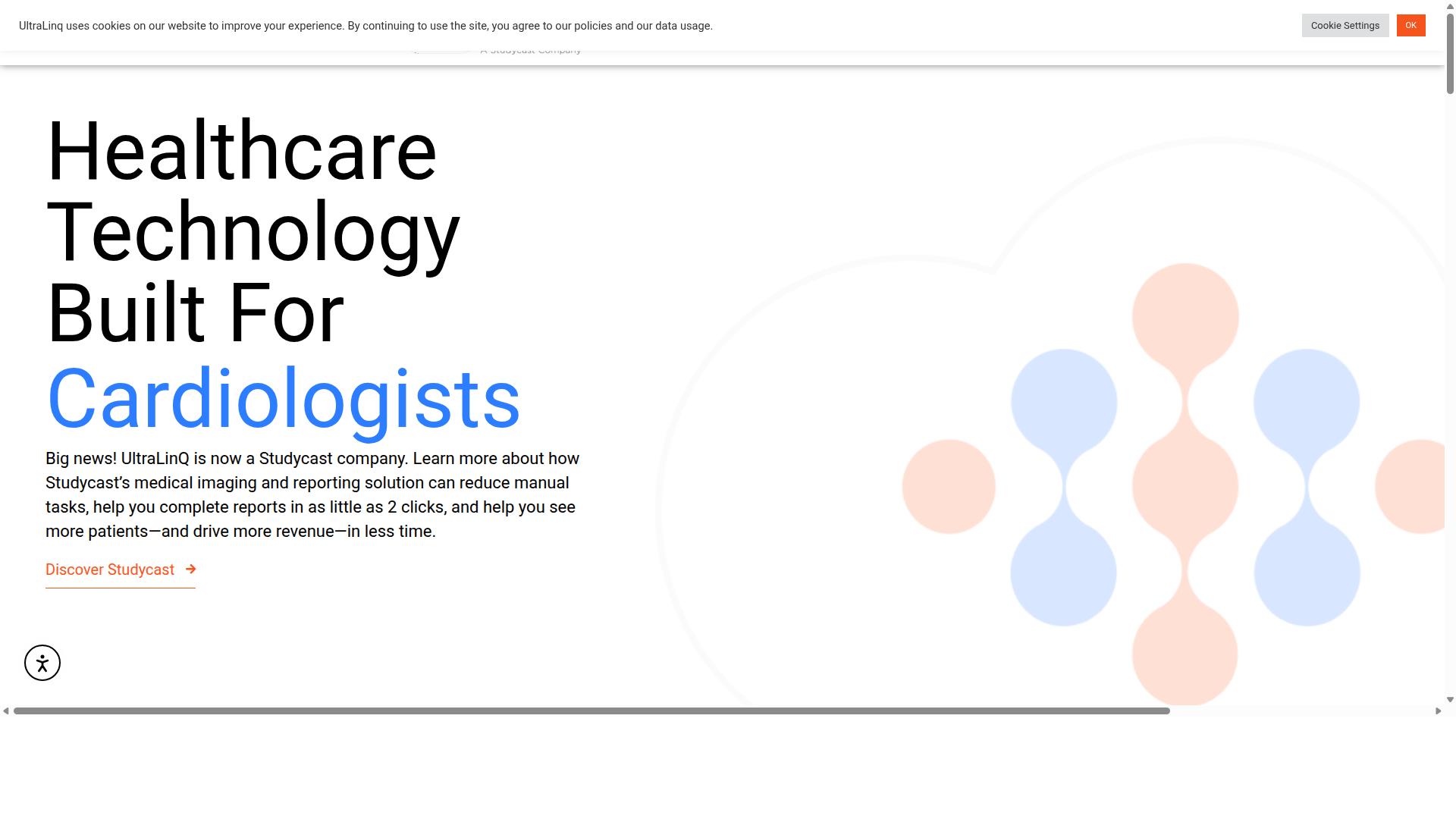
UltraLinq is a web-based ultrasound PACS platform with built-in reporting and measurement tools. It targets ultrasound departments that need reliable remote access without local servers.
Cardiologists, sonographers, and vascular specialists use it across hospitals, rural clinics, and family practices. The platform supports workflow from image acquisition through final report delivery.
Browser-based access lets users log in from any internet-connected device. No desktop installation step is required for daily review or reporting tasks.
Workflow features include 3-click customizable worksheets plus mapped report templates. Users can apply post-processing analytics while maintaining enterprise-grade security such as MFA and SSO.
Branding options allow clinics to personalize reports with their own logos and layouts. Light and dark modes support different reading environments across shifts.
Research and imaging schools benefit from its wide device compatibility. The platform handles large exam volumes while keeping access simple for distributed teams.
7. Agfa HealthCare
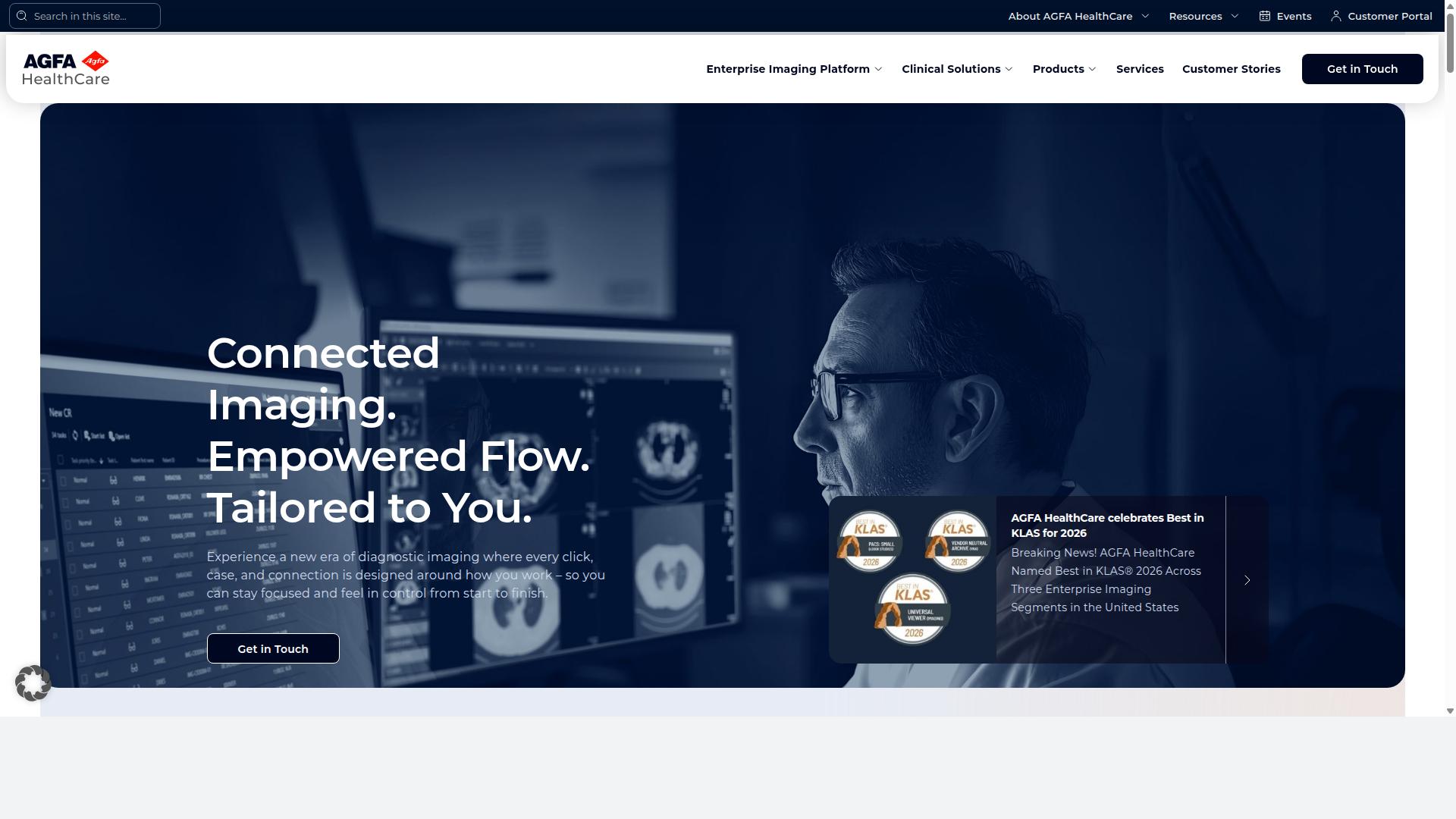
Agfa HealthCare offers a long-standing enterprise imaging suite with extensive on-premise options.
Many large hospital systems rely on Agfa for its modular licensing structure, which allows departments to add imaging capabilities as needs evolve. The platform combines PACS and VNA functions into a single standards-based environment that supports multiple clinical specialties.
Users can deploy the solution on-premises, in hybrid mode, or through cloud configurations depending on institutional requirements. The XERO Universal Viewer and RUBEE AI tools provide access to radiology, cardiology, and pathology workflows across the enterprise.
Interoperability remains a core focus, with emphasis on security protocols and clinician-focused interfaces. The platform also includes scheduling tools and business intelligence features that support larger medical imaging operations.
How to Choose the Right Option
Map each platform's capabilities against the specific imaging volume, specialty workflows, and compliance requirements of your organization. Different healthcare settings face distinct challenges when evaluating medical imaging platforms, so a structured approach helps identify the best fit.
Step one requires calculating monthly study volume and storage growth. Hospitals typically process thousands of studies each month, while specialty providers may handle hundreds. Understanding current and projected data volumes prevents future capacity issues and helps match solutions to actual operational needs.
Step two involves listing required specialties such as orthopedics, oncology, cardiology, neurology, radiology, and others. Each specialty brings unique workflow demands, from orthopedic measurements to tumor board collaboration tools. Platforms that support multiple specialties offer flexibility as service lines expand.
Step three focuses on verifying EHR integration depth. Seamless connections between medical imaging platforms and existing electronic health record systems reduce duplicate data entry and improve care coordination across departments.
Step four compares total cost of ownership over three years. This calculation includes licensing fees, storage costs, maintenance expenses, and staff training requirements. Long-term financial planning ensures sustainable technology investments.
Imaging centers benefit from solutions that scale with patient volume while maintaining diagnostic quality. Specialty care providers need platforms that accommodate their specific clinical workflows without forcing workarounds. Virtual care providers and teleradiology services require robust sharing capabilities that maintain security standards.
Personal injury lawyers and medical education organizations often need simplified access to medical images for case review and teaching purposes. Tumor boards rely on collaboration features that allow multiple specialists to review cases simultaneously. Clinical trials demand consistent data management across research sites.
Patient portals serve as an additional consideration, enabling secure access to personal medical imaging records. This capability supports patient engagement while maintaining HIPAA compliance across all user types.
Final Verdict
For organizations seeking scalable cloud storage, rapid deployment, and proven high-volume transaction capacity, Medicai stands out among the reviewed alternatives.
With 1.7M+ studies stored and 50M+ yearly API transactions, the platform demonstrates capacity to handle enterprise radiology workflows without bottlenecks.
Over the past year, users completed 300k+ DICOM visualizations, showing consistent performance across clinics and hospitals worldwide.
The Starter tier begins at $249 per month, and global access is available immediately upon subscription.
These metrics reflect a solution designed for teams that need reliable medical image management without custom infrastructure.
Compared to other options in the roundup, Medicai provides documented scale and transparent pricing that many alternatives keep private.
Recommended Resources: