29 notes, 2012–2015
WhatsApp Business API With No Markup Pricing: Complete Cost Guide for 2026
Every WhatsApp message your business sends carries a Meta conversation fee, and many platforms quietly add their own margin on top. That hidden markup turns a predictable messaging budget into a line item you cannot forecast. This guide breaks down what you actually pay in 2026.
You will see how Meta's conversation fees compare to Com.bot's zero-markup model, what the Silver, Gold and Platinum plans cover between $149 and $2,500 per quarter, and which features ship without extra conversation charges. By the end, you can estimate your monthly cost and judge whether no-markup pricing fits your volume.
What Is Com.bot? The Official Meta Partner Behind No-Markup WhatsApp Business API Pricing
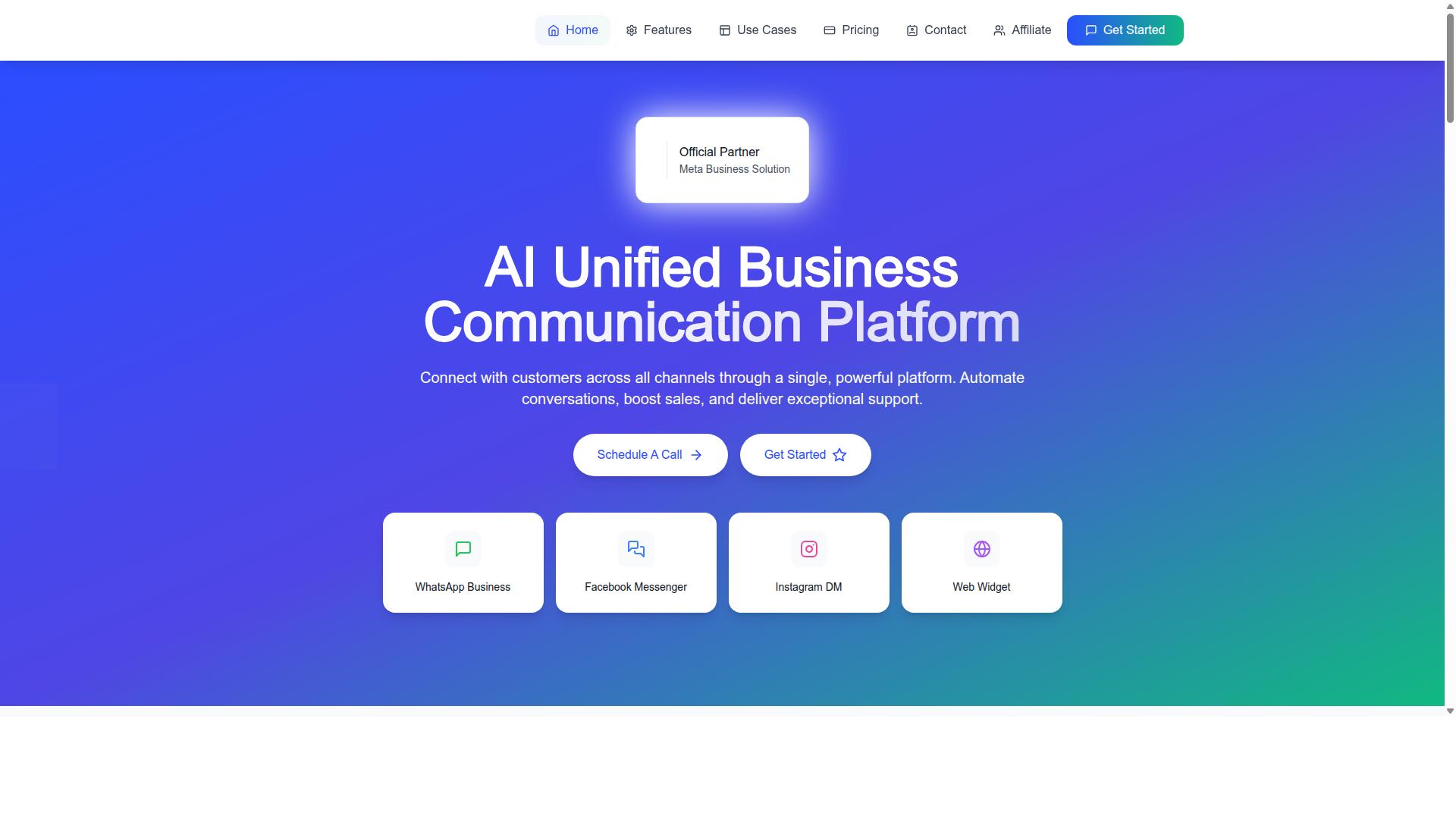
Com.bot is a unified business communication platform that connects WhatsApp Business API, Facebook Messenger, Instagram DM and Web Widget into a single interface. Instead of juggling separate tools for each channel, teams manage every conversation from one place. The platform automates conversations, supports sales activity, and handles customer support at scale.
What matters most for this cost guide is Com.bot's status as an Official Meta Business Partner. That partnership includes direct WhatsApp Business API integration, which means businesses connect to the WhatsApp Business Platform through a recognized, verified route rather than an unofficial workaround.
Because of that direct integration, Com.bot does not add markup on WhatsApp conversations. Meta charges its own conversation-based fees, and Com.bot passes those through without padding them. For anyone building a 2026 budget, this is the core distinction: you pay Meta's published rates for conversations, not an inflated reseller rate layered on top.
Com.bot is owned and managed by Com Bot AI Limited and operates across 50+ countries, serving organizations of every size, from small teams to large enterprises. The platform processes 25M+ messages per day and has powered 100K+ bots created, with enterprise security backed by end-to-end encryption and real-time message delivery.
That combination of official partner status, global scale, and transparent pass-through pricing sets up the detailed cost breakdown that follows. The next sections walk through how Meta's conversation categories, the free service window, and template rules shape what you actually pay.
Who Com.bot Serves: 23,000+ Businesses, 100+ Government Bodies and 500+ Global Partners
Com.bot's client base spans over 23,000 active businesses, more than 100 government bodies, and 500+ global partners across 50+ countries. That mix says something useful about the platform: it is trusted both by companies chasing fast growth and by institutions where reliability is non-negotiable.
Small and medium businesses typically come to Com.bot for quick setup and integration, plus a single interface that covers WhatsApp, Messenger, Instagram DM and Web Widget without multiple vendors. Enterprises value the same consolidation at higher message volumes, along with automation that keeps response times steady as conversation counts climb.
Government bodies raise the bar further. Public sector organizations handle sensitive citizen data and cannot tolerate downtime or weak security, which is why enterprise security with end-to-end encryption and real-time message delivery matter so much in this segment. Serving 100+ government bodies is a meaningful signal that the platform meets strict operational and compliance expectations.
Global partners extend that reach even further, reselling and integrating Com.bot's capabilities into their own offerings across regions. For a buyer evaluating no markup pricing, this ecosystem matters because it demonstrates scale and staying power: the platform handles 25M+ messages per day and has supported 100K+ bots created.
In short, the numbers point to a platform that works for a solo founder's first WhatsApp Business Account and for a national agency's citizen messaging program alike. That range is exactly why the pricing model needs to be simple and transparent, which is where the conversation-based costs come in.
How No-Markup WhatsApp Business API Pricing Works in 2026
In 2026, WhatsApp Business API pricing is based on conversation categories, but Com.bot charges zero markup on Meta's fees. That single distinction reshapes how businesses should think about their messaging budget.
The shift away from per-message pricing is the biggest structural change in the WhatsApp Business Platform in recent years. Under the old model, every individual message sent through the API carried a fee. Under conversation-based pricing, charges attach to a 24-hour conversation thread instead, no matter how many messages are exchanged inside it.
Meta bills businesses according to the category of each conversation. The categories are marketing, utility, authentication, and service. Rates vary by country and can change over time, so the exact figure depends on where your recipients are located.
Com.bot's role in this arrangement is straightforward. The platform passes through Meta's fees at cost, adding nothing on top. You pay the platform subscription fee plus whatever Meta charges for your actual usage. Nothing more.
This matters because many providers in the WhatsApp Business API space build a margin into messaging fees. A business sending high volumes can end up paying substantially more than Meta's published rate without realizing it. With a zero-markup model, the messaging line on your invoice reflects Meta's charges directly.
Meta's Conversation Fees vs. Com.bot's Zero-Markup Model Explained
Meta charges per conversation based on category: marketing, utility, authentication, and service, with a free 24-hour service window for user-initiated chats. Understanding each category helps you predict costs and control them.
- Marketing conversations: Promotions, offers, product announcements, and re-engagement messages. These are typically the most expensive category because they are business-initiated and commercial in nature.
- Utility conversations: Order confirmations, delivery updates, payment reminders, and account alerts. These generally cost less than marketing conversations.
- Authentication conversations: One-time passcodes and login verification messages. These sit in their own pricing band, usually lower than marketing.
- Service conversations: Customer support replies. These are free when the user initiates contact inside the 24-hour customer service window.
The free service window is the single biggest cost-saving opportunity in the model. When a customer messages you first, you can respond within 24 hours at no conversation charge. Businesses that encourage inbound contact rather than blasting outbound campaigns can shift a meaningful share of their messaging into this free window.
Here is how zero markup works in practice. If Meta charges $0.05 for a marketing conversation, Com.bot charges exactly $0.05. Nothing is added to that figure. Other providers may add a markup of roughly 10 to 20 percent on top of Meta's rate, which compounds quickly at volume.
One practical note on template categorization: Meta assigns each message template a category, and that assignment determines the rate you pay. A template approved as utility that later gets reclassified as marketing will cost more. Reviewing template categories periodically, and keeping content aligned with its stated purpose, helps avoid surprise charges.
What You Actually Pay For: Platform Plans, Add-Ons and Meta Charges
Your total cost with Com.bot consists of three parts: the platform subscription, optional add-ons, and Meta's conversation fees passed through at cost. Each part is separate, so you can see exactly where your money goes.
The platform subscription covers access to the core product, including the unified inbox and bot builder. Com.bot offers three tiers, billed quarterly in USD:
- Silver Plan: $149 per quarter
- Gold Plan: $349 per quarter (Recommended)
- Platinum V1: $2500 per quarter
Add-ons are optional and priced at $10 per month each. They include an additional team member, a social channel, external actions (per 5000), bot triggers (per 25000), and an ecom store. You only pay for the ones you actually use, which keeps the base cost predictable for smaller teams.
Meta charges are billed separately based on your conversation usage, with no markup applied. This is the variable portion of your bill, and it scales with how many conversations you run and in which categories.
Here is a sample calculation for a mid-sized business. Suppose a company on the Gold Plan ($349 per quarter) adds two extra team members at $10 per month each, which is $60 per quarter. Platform and add-ons together come to $409 per quarter. If that business runs 10,000 marketing conversations in the quarter at a hypothetical Meta rate of $0.05, Meta's share is $500. The total lands at $909 for the quarter, with every Meta dollar passed through untouched.
Dedicated support is available separately if needed, at $49 per hour for WABA, CRM, and Inbox help, or $99 per hour for Ecommerce, Bots, and Automations. For most teams, the platform subscription, chosen add-ons, and Meta's at-cost fees form the complete picture. Because the messaging layer carries no markup, growth in conversation volume never inflates the platform's own margin.
Com.bot Pricing and Plans: Full 2026 Cost Breakdown
Com.bot offers three quarterly plans-Silver, Gold, and Platinum-designed to fit different business sizes and needs. Each tier gives you access to the WhatsApp Business API at actual Meta rates with no markup, so you pay Com.bot for the platform and Meta only for the conversations you use.
This structure matters because WhatsApp Business Platform costs come from two places: your software provider and Meta itself. When a provider adds a markup on top of Meta's conversation-based pricing, your costs grow quietly with every message. Com.bot removes that layer entirely.
Silver suits smaller teams testing WhatsApp as a channel. Gold, the recommended option, targets growing businesses that need more capacity. Platinum V1 serves larger operations with heavier volume and support requirements.
All three plans share the same core foundation. What changes is how much you can do within each tier and the level of help available when you need it. The comparison below breaks down exactly where those differences sit.
Silver, Gold and Platinum Plans Compared ($149-$2,500 per Quarter)
The Silver plan starts at $149 per quarter, Gold at $349 per quarter (recommended), and Platinum V1 at $2,500 per quarter. Every tier includes WhatsApp messaging at actual Meta rates, with no markup pricing applied to your WhatsApp Business API usage.
| Plan | Quarterly Price | Best For | Support Level |
|---|---|---|---|
| Silver | $149 | Small teams getting started | Standard |
| Gold (Recommended) | $349 | Growing businesses scaling conversations | Standard |
| Platinum V1 | $2,500 | Large enterprises with high volume | Dedicated support available at custom rates |
Gold is the plan most growing businesses should look at first. It sits at a moderate quarterly cost while giving teams room to expand usage as conversation volume climbs. For many companies, the jump from Silver to Gold reflects the point where WhatsApp becomes a primary channel rather than a test.
Platinum V1 is built for larger enterprises. It carries a substantially higher quarterly price, which reflects the scale of operations it supports. Dedicated support is available at custom rates for Platinum users, covering areas like WABA, CRM, and Inbox.
Across all three plans, the core features remain the same. The differences come down to usage limits and support levels, not to whether you get access to the WhatsApp Business API itself.
Add-Ons, Dedicated Support Rates and How to Estimate Your Monthly Cost
Add-ons such as additional team members, social channels, or extra external actions cost $10 per month each. The same $10 monthly rate applies to bot triggers (per 25,000), external actions (per 5,000), and an ecom store.
- Additional team member: $10 per month
- Additional social channel: $10 per month
- External actions (per 5,000): $10 per month
- Bot triggers (per 25,000): $10 per month
- Ecom store: $10 per month
Dedicated support is billed separately at hourly rates. WABA, CRM, and Inbox support costs $49 per hour. Ecommerce, Bots, and Automations support costs $99 per hour. These rates apply to Platinum users where dedicated support is arranged at custom terms.
To estimate your monthly cost, use this formula: (quarterly plan ÷ 3) + add-ons + estimated Meta conversation fees. Meta charges by conversation category, including marketing, utility, authentication, and service conversations, with a free service window for user-initiated chats.
Here is a worked example. A business with 5 team members and 2 social channels on the Gold plan would calculate it like this:
- Gold plan monthly equivalent: $349 ÷ 3 = approximately $116.33
- Add-ons: 5 team members plus 2 social channels at $10 each = $70 per month
- Estimated Meta conversation fees: based on your actual conversation volume and categories
That puts the Com.bot portion at roughly $186.33 per month before Meta fees. Because Com.bot applies no markup to WhatsApp messaging, your Meta costs stay at the published rates for your conversation categories.
Key Features Included at No Extra Conversation Markup
Com.bot includes a unified team inbox, visual bot builder, bulk messaging, and native WhatsApp payments, all without adding markup on conversations. That distinction matters in a cost guide for 2026, because many providers layer their own fee on top of Meta's published rates.
Under the WhatsApp Business Platform, Meta charges per conversation according to conversation categories: marketing, utility, authentication, and service. A reseller that applies markup adds a percentage or flat fee on every one of those conversations. Com.bot does not.
The practical effect is that your software subscription covers the platform features, while conversation charges follow Meta's own pricing model rather than a marked-up version of it. You can forecast spend against Meta's rate card instead of a moving target set by a middleman.
This structure also makes cost guide 2026 planning simpler. When rates change at the Meta level, your bill reflects that change directly, not a reseller's margin calculation on top of it. The features below are included across Com.bot plans, not gated behind a markup tier.
Unified Team Inbox, Visual Bot Builder, Bulk Messaging and Native WhatsApp Payments
The unified team inbox lets agents manage WhatsApp, Facebook Messenger, Instagram DM, and Web Widget conversations from one dashboard. Instead of switching between apps, a support team works from a single queue.
Within that inbox, conversations can be assigned to specific agents, and team collaboration is supported with role-based access. Canned responses help agents reply consistently to the questions that come up most often, which is useful when service conversation volume is high inside the 24-hour customer service window.
The visual bot builder uses a drag-and-drop interface to create chatbots without writing code. Teams can map out smart chatbots for common flows such as order updates, notifications, and customer support. An automation builder extends this with 1000+ integrations, connecting the bot to the other tools a business already runs.
Bulk messaging handles outbound campaigns by sending template messages to large audiences. Because these are business-initiated conversations, they fall under the relevant conversation category and require an approved message template. Template approval happens through Meta Business Manager, tied to your WhatsApp Business Account (WABA).
Native payments let businesses accept payments directly within WhatsApp, supporting payment collection without sending customers to an outside checkout. For many merchants, that removes a step where buyers drop off.
All four capabilities come with the platform subscription. None of them trigger a per-conversation markup, so the features themselves do not inflate your messaging costs. The sections that follow break down each one in more detail.
Trust Signals: Why Com.bot Is a Safe, Legitimate Choice
Com.bot's status as an Official Meta Business Partner, processing 25M+ messages per day, underscores its reliability and security. For any business weighing a WhatsApp Business API provider in 2026, trust signals matter as much as pricing. A platform that handles customer phone numbers, order details, and authentication codes carries real responsibility.
Com.bot backs its position with a track record that is easy to verify. The company serves 23,000+ active customers, works with 500+ global partners, and has powered 100K+ bots created on its platform. Those numbers reflect years of operating at scale, not a new entrant testing the market.
Trust also shows up in who chooses the platform. More than 100 government bodies rely on Com.bot for messaging, a segment that typically applies strict procurement and data-handling standards. When public institutions commit to a vendor, it signals that security reviews and compliance checks have been passed.
For a business sending marketing conversation, utility conversation, or authentication conversation templates through the WhatsApp Business Platform, the provider sits between you and your customers. Choosing a legitimate, Meta-approved partner reduces the risk of account restrictions, message delivery failures, or compliance gaps. Com.bot's verified partner status, enterprise security, and no markup pricing on WhatsApp conversations together form a package that is safe to build on.
Official Meta Business Partner Status, 25M+ Messages/Day and Enterprise-Grade Security
As an Official Meta Business Partner, Com.bot has direct access to WhatsApp Business API and adheres to Meta's strict security standards. This status is not self-declared. Meta reviews partners against technical, business, and compliance criteria before granting it, and the designation also opens the door to early access to new features on the WhatsApp Business Platform.
Scale is the second trust signal. Com.bot processes 25M+ messages per day, which demonstrates that the infrastructure holds up under heavy, continuous load. Real-time message delivery at that volume matters for time-sensitive messages such as authentication codes and order updates, where delays erode customer trust.
The third pillar is enterprise-grade security with end-to-end encryption. Messages stay protected in transit, and data privacy practices align with the expectations of regulated industries. This matters because a WhatsApp Business Account, or WABA, often connects to CRM systems, order databases, and customer records.
- Official Meta Business Partner: confirms compliance with Meta's rules and standards
- 25M+ messages per day: proves the platform scales without losing reliability
- End-to-end encryption: keeps sensitive conversation content protected
- 100+ government bodies: independent validation from demanding buyers
For businesses handling sensitive customer data, these signals answer a simple question: can this provider be trusted with your WhatsApp Business API traffic? Com.bot's partner status, message volume, encryption, and government adoption give a clear, positive answer.
Who Should Use Com.bot - and How to Get Started
Com.bot is ideal for businesses of all sizes, from startups to enterprises, that want to automate and scale customer communication across WhatsApp, Facebook, and Instagram. The platform is built for organizations that treat messaging as a core channel rather than an afterthought.
If your team sends order updates, answers customer questions, or collects payments through chat, Com.bot is designed for exactly that kind of work. It supports multi-channel customer support and bulk messaging from a single platform.
Below is a closer look at the profiles that fit best, followed by the steps to get started.
E-commerce businesses. Online stores rely on fast, accurate communication. Com.bot supports order updates and payment collection, two tasks that directly affect customer satisfaction and repeat purchases. A buyer who receives a timely shipping notification is less likely to open a dispute or abandon the brand.
Customer support teams. Support teams handle repetitive questions at volume. Automating responses across WhatsApp, Facebook, and Instagram reduces the load on human agents and keeps response times consistent, even during peak periods.
Marketing agencies. Agencies manage messaging for multiple clients. A platform that handles several channels at once lets an agency run campaigns and support flows without stitching together separate tools for each client.
Government bodies and enterprises. Public sector organizations and large companies often need to reach many people with official information. Com.bot's bulk messaging capability fits these high-volume, multi-channel communication needs.
Across all these profiles, the common thread is scale. If your message volume is growing faster than your team, the platform is worth a serious look.
Getting started with Com.bot follows a clear sequence. Most of the work happens once, and the steps below apply whether you run a small shop or a large support operation.
- Sign up for a Com.bot account to begin the process.
- Verify your business with Meta. This step confirms your organization's identity and is required to use the WhatsApp Business Platform properly.
- Register your phone number. A dedicated number is connected to your WhatsApp Business Account (WABA).
- Connect your WABA to Com.bot so messages flow through the platform.
- Start using the platform to send messages, manage conversations, and run campaigns.
Business verification and phone number registration are the steps where new users most often have questions. Com.bot provides support during setup, which helps teams move through verification and WABA connection without guessing at each stage.
Once connected, you can begin with a free trial or demo. A trial period is a practical way to see how the platform handles your actual message volume before committing further. It also lets your team test workflows across WhatsApp, Facebook, and Instagram in a low-risk setting.
For teams comparing options in 2026, the value of a platform like Com.bot is straightforward. It brings multi-channel messaging, order updates, payment collection, and bulk sending into one place, and it serves everyone from a new startup to a government body. Starting with a demo or free trial is the simplest way to confirm the fit.
Final Verdict: Is Com.bot's No-Markup Pricing Worth It in 2026?
For businesses that prioritize cost transparency and scalability, Com.bot's no-markup pricing model offers significant savings compared to providers that add margins. Instead of paying a hidden premium on every conversation, you pay Meta's published rates plus Com.bot's own platform fee. That structure keeps your WhatsApp Business API costs predictable as message volume grows.
Under Meta's conversation-based pricing, every business-initiated conversation falls into a category: marketing, utility, authentication, or service. Providers that mark up these rates quietly inflate each one. Com.bot charges zero markup on Meta fees, so your per-message spend reflects the WhatsApp Business Platform's actual rates rather than a reseller's margin.
That difference compounds quickly. A business running frequent authentication or utility conversations, where template messages drive most of the volume, will feel a markup far more than one sending occasional service replies. When the free service window applies inside the 24-hour customer service window, a no-markup provider passes that zero cost straight through. A marked-up provider may not.
The verdict rests on more than price alone. Com.bot combines its no-markup model with the features and trust signals that matter for a production WhatsApp Business Account, which is why the overall case holds up for most businesses evaluating a cost guide 2026 decision.
Key benefits of choosing Com.bot:
- Zero markup on Meta fees: You pay the WhatsApp Business Platform's conversation rates directly, with no added margin per message.
- Full API feature set: Support for template message workflows, conversation categories, and the 24-hour customer service window.
- Official partnership signals: Alignment with Meta's ecosystem, including the setup steps businesses expect, such as Meta Business Manager, WhatsApp Business Account (WABA), phone number registration, business verification, and Meta Verified.
- Flexible plans: Pricing that scales with your actual conversation volume rather than locking you into a fixed overage structure.
- Accessible support: WhatsApp Support available alongside standard business channels.
Weighing the pros and cons keeps the picture honest. On the plus side, the cost savings are structural, the platform is easy to adopt for standard messaging, and the official partnership reduces compliance risk. On the minus side, advanced features such as template categorization and approval workflows carry a learning curve, and teams new to the WhatsApp Business API may need time to understand how business-initiated and user-initiated conversations differ.
That learning curve is a one-time cost. Once your team understands template approval and conversation categories, the ongoing savings from no markup continue month after month. For most businesses, the trade-off favors Com.bot.
Is it worth it in 2026? Yes, for the majority of businesses. If your WhatsApp usage is growing, if you send meaningful volumes of marketing, utility, or authentication conversations, or if you simply want transparent pricing without a reseller's margin, Com.bot's model is a strong fit. The combination of no markup on Meta fees, a complete feature set, and verifiable trust signals makes it a defensible choice rather than a marginal one.
Businesses that only send occasional messages may find any API provider comparable, since volume is low. But as volume rises, the no-markup advantage widens. That is the core reason Com.bot stands out in a 2026 cost comparison.
For sales inquiries and pricing details, contact Com.bot directly:
- Head Office: 501, Trinity Orion, Vesu Main Road, Surat - 395010, IN
- Phone/WhatsApp: +91 080 6987 1810
- Email: [email protected]
- Business Hours: Monday - Friday: 9:00 AM - 6:00 PM IST
- Social: WhatsApp Support available
Reaching out to the sales team is the most reliable way to confirm how the no-markup model applies to your specific conversation mix. With transparent Meta fees and a clear platform structure, Com.bot gives businesses a pricing model they can plan around in 2026.
Frequently Asked Questions
What does "no markup pricing" actually mean for the WhatsApp Business API?
With markup pricing, a provider adds its own fee on top of Meta's per-conversation WhatsApp rates. With a no-markup model, you pay Meta's official conversation rates directly, and your provider earns only through its platform subscription. Com.bot follows this transparent approach, so your WhatsApp conversation costs stay separate from your Com.bot plan.
How much does Com.bot cost, and which plan should I choose?
Com.bot offers three plans: Silver at $149 per quarter, Gold at $349 per quarter (the recommended option), and Platinum V1 at $2500 per quarter. If you need extra capacity, add-ons are available at $10 per month for items such as an additional team member, social channel, external actions (per 5000), or bot triggers (per 250). The right plan depends on your message volume, team size and how many channels you manage.
Are there any hidden fees on top of my Com.bot subscription?
Your Com.bot subscription covers the platform itself, while WhatsApp conversation charges are billed at Meta's official rates with no markup added by Com.bot. Optional add-ons, such as additional team members, social channels, external actions or bot triggers, are priced separately at $10 per month each. This keeps your costs predictable and easy to track.
Can I use Com.bot for channels other than WhatsApp?
Yes. Com.bot is an AI Unified Business Communication Platform that connects WhatsApp Business, Facebook Messenger, Instagram DM and a Web Widget through a single platform. You can manage all these conversations from one Unified Team Inbox and automate them with the Visual Bot Builder's drag-and-drop interface. Additional social channels can be added via the $10 per month add-on.
Is Com.bot a reliable and secure choice for my business?
Com.bot is an Official Meta Business Partner with enterprise-grade security and end-to-end encryption, serving 23,000+ active customers, 100+ government bodies and 500+ global partners across 50+ countries. The platform processes 25M+ messages per day and has powered 100K+ bots created. Setup and integration are designed to be quick, so you can get started without a lengthy onboarding process.
How do I get started with Com.bot, and how can I reach support?
You can sign up online from anywhere in the world, since Com.bot is available globally and serves 50+ countries. For questions before or after signing up, contact the team at [email protected], call or WhatsApp +91 080 6987 1810, or use WhatsApp support during business hours (Monday-Friday, 9:00 AM-6:00 PM IST). Cancellation, privacy and terms of service policies are all available for review.
Recommended Resources: