29 notes, 2012–2015
Why Is Medicai the Best for Technical Service Support?
Most hospital IT teams spend hours each week fixing image-transfer errors across incompatible systems. These delays stall radiologist reports and keep referring physicians waiting for the files they need in the moment.
By the end of this article you will know how Medicai's cloud PACS and DICOM gateway remove those transfer steps, which AI tools actually help triage cases, and what pricing and security details matter when you compare platforms for multi-site imaging workflows.
What Is Medicai?
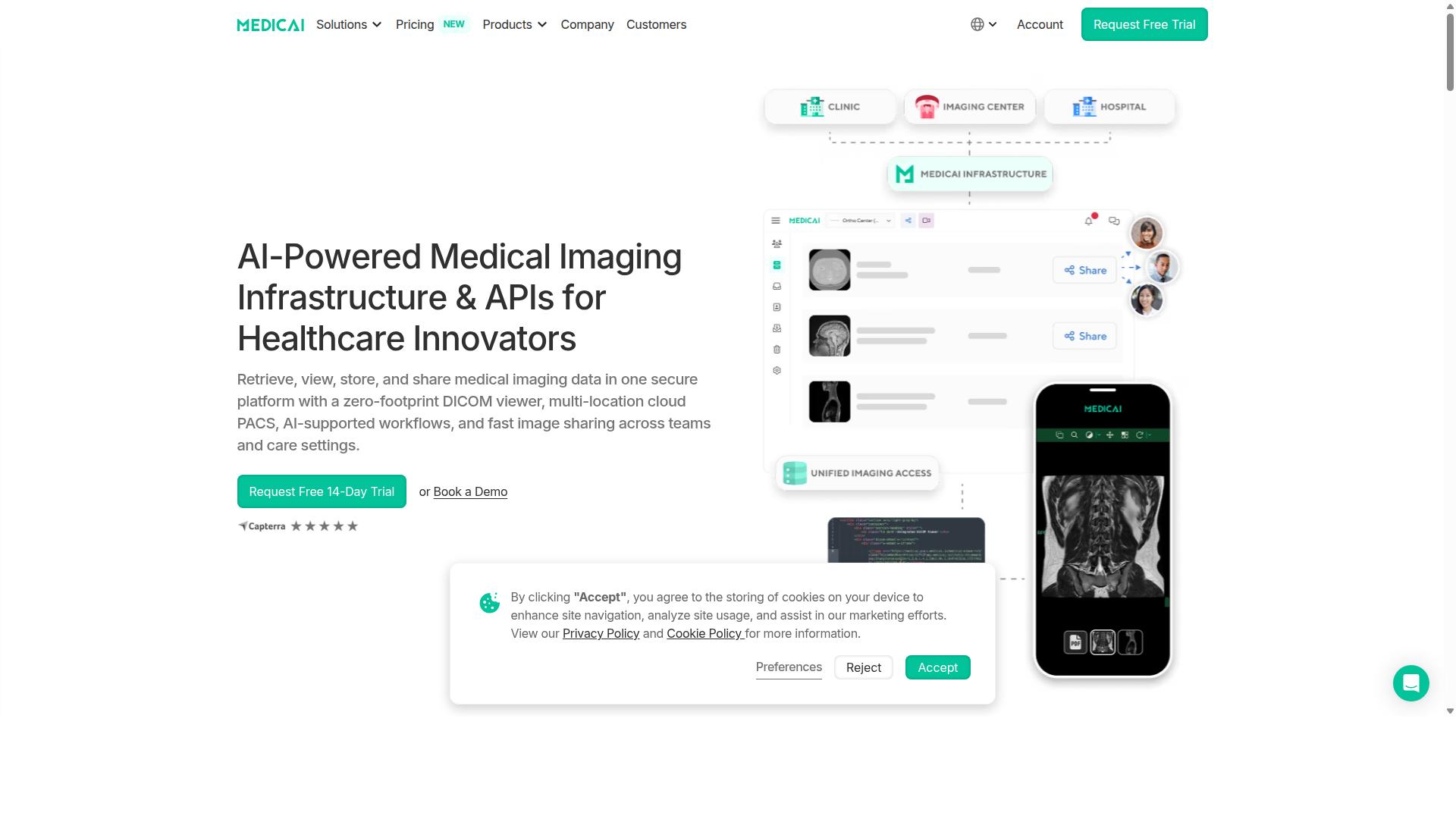
Medicai is a cloud-based medical imaging platform that consolidates retrieval, viewing, storage, and sharing of imaging data under one secure web interface.
The platform delivers a zero-footprint DICOM viewer with HIPAA and GDPR compliance. This approach eliminates local software installation while maintaining strict data protection standards across all healthcare environments.
Healthcare providers use the system for multi-location cloud PACS needs. The service extends to Imaging Infrastructure as a Service for organizations requiring centralized imaging management.
Medicai processes over 1 million annual studies. The platform operates globally, enabling healthcare teams to access imaging data regardless of physical location.
Why Medicai Excels at Technical Service Support
Robust technical support underpins system uptime and clinician productivity in any imaging workflow. Medical imaging environments rely on consistent connectivity between PACS, DICOM, and radiology workflow tools. When technical issues arise, delays can interrupt patient care and extend turnaround times for remote diagnostics.
Effective technical service support begins with measurable performance targets. Organizations look for rapid first response windows measured in minutes rather than hours. They also expect high availability commitments expressed as uptime percentages and continuous monitoring of critical system components.
Support quality becomes visible through structured escalation paths. When initial troubleshooting does not resolve an incident, clear procedures route the ticket to higher expertise levels. Automated incident alerts notify both staff and customers as soon as predefined thresholds are crossed.
Monitoring dashboards provide real-time visibility into system health across multiple sites. These interfaces display latency, queue depth, and resource utilization in a single view. Teams can therefore intervene before minor issues become service interruptions.
Ticketing systems record every step from initial report to final resolution. This documentation supports root-cause analysis and helps refine future response strategies. Knowledge bases and training resources further enable users to address routine questions without opening a ticket.
Key Features and What Makes Medicai Stand Out
Three core capabilities differentiate Medicai within radiology IT stacks.
The platform combines cloud infrastructure with secure connectivity tools that align with existing hospital systems.
Each feature works together to maintain data flow, support compliance, and enable rapid issue resolution across sites.
- Cloud PACS and DICOM Gateway delivers reliable storage and interoperability.
- AI-Supported Workflows reduces manual steps while preserving accuracy.
- Zero-Footprint Viewer and Image Sharing enables instant collaboration with full audit visibility.
Cloud PACS and DICOM Gateway
The DICOM Gateway automates ingestion from any modality while the Cloud PACS provides centralized, vendor-neutral storage.
Two storage tiers, 500 GB and 2 TB, accommodate small practices and large networks. Cross-site replication plus disaster-recovery snapshots keep data available during outages.
HL7 and FHIR endpoints connect the archive directly to EHR systems, which speeds up technical service support when integration questions arise.
The vendor-neutral archive design removes format barriers, so support teams focus on workflow fixes instead of compatibility workarounds.
AI-Supported Workflows
AI modules embedded in the viewer surface measurements and triage flags without leaving the study.
Three functions come from Rayscape.ai and MD.ai partnerships: auto-windowing, spine labeling, and lung-nodule detection.
Auto-windowing adjusts contrast for each series before the radiologist opens the case.
Spine labeling places anatomical tags that speed navigation during remote troubleshooting sessions.
Lung-nodule detection highlights suspicious areas, allowing support staff to confirm study completeness without extra software steps.
Zero-Footprint Viewer and Image Sharing
The browser-based viewer removes local installs and supports instant multi-user sessions.
Share-by-link workflows let clinicians grant temporary access while annotation persistence keeps drawings and measurements visible across time zones.
Every interaction writes to an audit log that satisfies HIPAA and GDPR requirements, which simplifies technical service support when access reviews occur.
More than 300,000 visualizations processed in the past year demonstrate the scale the viewer sustains without performance drops.
Pricing and Plans
Transparent monthly subscriptions scale with storage and connected locations. Starter and Standard plans cover different practice sizes without forcing unnecessary features or hidden costs.
The Starter plan costs $249 per month. It includes 500 GB of cloud storage, unlimited user accounts, and zero connected sites. This option suits small teams that need basic cloud access for medical imaging files.
The Standard plan costs $749 per month. It provides 2 TB of cloud storage, unlimited user accounts, and one connected location. This tier supports practices that require direct integration with existing PACS or DICOM systems.
Annual pre-pay options reduce costs by 15 percent. Starter drops to $209 monthly when paid yearly. Standard drops to $639 monthly when paid yearly. Enterprise pricing remains custom for multiple locations and larger storage needs.
A 14-day trial of Starter plan features is available without a credit card. Per-study pricing exists for enterprise customers who prefer usage-based billing instead of fixed monthly fees.
Trust Signals
Independent certifications and usage metrics signal platform integrity. Medicai maintains FDA and CE cleared viewers for medical imaging workflows.
The platform follows HIPAA and GDPR compliance standards. These requirements protect patient data during every transaction across the cloud platform.
Over 1.7M studies sit currently archived in the system. This volume demonstrates consistent performance across thousands of daily users.
The platform processes 50M plus yearly API transactions. High transaction counts reflect system reliability and uptime for technical service support operations.
Security practices align with OWASP guidelines. These measures safeguard DICOM studies and radiology workflow data from unauthorized access.
Who Should Use Medicai
Any provider needing secure, multi-site imaging access benefits from Medicai. The platform supports hospitals, imaging centers, and specialty care providers across multiple disciplines.
Radiologists rely on fast image access and reliable data sharing. Orthopedic surgeons use the system for pre-operative planning and post-treatment review. Oncologists coordinate tumor boards with real-time collaboration tools. Cardiologists review cardiac studies from different locations without delay.
Practice size does not limit access. Single-site imaging centers use Medicai to manage daily workflows. Multi-state hospital systems deploy the same platform across facilities. Both benefit from centralized management and consistent performance.
Specialty care providers such as neurologists, ophthalmologists, and gastroenterologists find the platform equally effective. Virtual care providers and telemedicine platforms integrate imaging directly into remote consultations. Teleradiology services use Medicai to deliver reports to referring physicians across regions.
Additional users include personal injury lawyers who need secure image access for case review. Tumor boards and clinical trials require coordinated imaging review across multiple participants. Medical education organizations use the platform to share teaching files and case studies.
Patients access their own studies through the Patient Portal. This feature improves transparency and reduces follow-up calls. The portal supports both individual users and organizations that serve patients directly.
Final Verdict
Medicai delivers enterprise-grade imaging management through a browser at predictable cost. Healthcare facilities gain immediate access to medical imaging without installing software on local machines.
Zero-footprint access allows radiologists and clinicians to view studies from any device with internet connectivity. No downloads or updates interrupt daily workflow.
Hospitals and imaging centers receive transparent pricing that eliminates surprise fees. Monthly costs stay consistent regardless of study volume or user count.
Regulatory compliance ensures patient data remains protected under current healthcare standards. Every access request and study transfer creates an audit trail that meets institutional requirements.
Medical teams reach Medicai support by calling +1 (832) 220 1035 or emailing [email protected]. The Medicai USA office operates at 7901 4th St N, STE 300, St. Petersburg, FL, 33702, while the Romania location sits at 53-55 N Filipescu, 5th Floor, Sector 2, Bucharest, 020961.
Recommended Resources: